

I’m back from a mini-vacay and VidCon! I am aiming to return to our regularly scheduled (ideally) weekly newsletter cadence but will entirely depend on how cooperative my Gen Alpha focus group (aka my children) are. But enough about me, let’s dive into what we’ve missed with Alphas and Z’s.
🧠 Generational Trust Gaps: Digital ≠ Universal
Morning Consult’s brand trust report confirms what we all feel - Millenials and GenZ have closer taste preferences than their older counterparts and that can largely be attributed to digital consumption habits.
According to the Morning Consult report:
Gen Z ranked YouTube #1, Google at #5, Netflix #20
Millenials ranked Google #1, YouTube #3, and Netflix #10
GenX - Google #15 and YouTube #21
Boomers didn’t rank a single digital brand
🔍 Why?
Older gens formed trust via legacy media and consistent messaging. Trust was built on product reliability and corporate reputation over time.
Gen Z/Millennials live online- trust is built through daily social interaction, relationships, and storytelling.
There is a large delta between GenZ and GenX/Boomer rankings, with Millennials acting as a bridge generation.
🧩 TLDR: Trust and authenticity are defined differently by each generation. While older generations see ads and packaged consistency as authentic ways to connect, younger generations have a different definition of authenticity and that manifests in everyday, everywhere relationships online.
🎨 Taste Is the New Intelligence
Last year, I toured an elementary school for my kindergartener and the Principal smartly identified that the future skills that will matter are 4 C’s - “collaboration, communication, creativity and critical thinking”. But a simple way to think about it - to future proof ourselves is through art and taste.
Stephanie Tuerk’s piece on Taste as the New Intelligence says it best: Taste = filter. It’s how we protect our mental environment.
Taste is the filter in which you curate your feeds and environment. It is what protects your mind.
Taste is a skill that refines itself. Unlike trends and now even faster fleeting ‘micro-trends’, taste is the opposite. It filters, it knows where and when to participate, it is timeless.
Taste creates resonance. And resonance survives time. And time … in this hyper speed era of attention, is value.
Unlike what I discussed last week in the ‘great flattening’ - taste is the anthesis. Taste is expansive from a core understanding of self.
Taste is what we pay attention to, and understanding what moves us, drains us.
Taste survives time. And in the day and age of hyper speed culture. Timelessness is the ultimate luxury.
📌 The takeaway: Curation (knowing what you like and don’t like, and WHY), not volume, builds value. For both people and brands, showing restraint and intentionality, knowing what is true to your TASTE is the flex.
🎥 Why I’ll Always Bet on a Creator
Open Gardens’ Bill Odell dropped an essay that’s basically a manifesto for how legacy media should be thinking about creators. But why should you care? Well - because the creator economy is estimated to be a $250 billion global force reshaping how brands build loyalty, drive engagement and grow their businesses. Beyond economics, creators are also shaping culture. Former gatekeepers now have to learn to react to culture that they didn’t create.
Some takeaways:
🎨 Creators = Startups of Hollywood. Today’s top creators don’t just star in content - they write, shoot, edit, distribute, and monetize. Treating them like actors or influencers is only one layer.
👴 Legacy roles are shifting. Legacy producers need to lead as well as be humble. The new role is to support, not steer. I’d go further than the article to say that legacy producers shouldn’t bring the process of the old world into the new one. Bring the legacy experience but show up with a beginners mindset.
✨Premium ≠ Big Budget. Premium is intention. Premium now means strategic, creatively resonant, community, audience and platform centric. With over 50% of YouTube watch time now on TVs, ‘quality’ is not just production value but strategic and audience connection.
💰 There’s no one-size-fits-all economic model. Ad-supported, paid, TikTok-native, hybrid podcasts, full-stack creator commerce is all disrupted. everything is on the table. Survival is a result of speed, strategy and audience listening.
🗳️ Distribution is democratized. Anyone can upload, but creators are the ones who build with community and relationships (intensity of love and affinity) in mind.
🏡 The next wave is full-stack: content, community, culture, commerce. It will go beyond “shows” or “hosting projects with creators”. We will be in an era of creator-led media brands that activate fandom and drive revenue across touch points.
🧠 TLDR: Creator is a mindset. It is about the boldness and willingness to publish, create and to listen to your audience.
⚡️Attention Economy → Simulation Economy
Kyla Scanlon is an absolute genius, this piece on the ‘value’ of friction discusses that we are no longer in an ‘attention economy’ but rather - one of a ‘simulation’.
“It’s not just about keeping you glued to the screen anymore. It's about convincing you that any sort of real-world effort is unnecessary, that friction itself is obsolete. The simulation doesn’t just occupy your attention, right, instead it replaces the very notion that engagement should require effort.”
We all ultimately live in 3 worlds - physical, digital and curated… and friction moves between these 3 worlds.
The economy is a closed loop of friction exchange. Every reduction in friction for one user creates more for someone else. Seamless delivery creates strain on gig workers. The digital world is optimized for ease but at a cost (environment, labor etc.).
Loneliness is now a business model. Zuckerberg frames AI companions as filling a "friendship gap", not to replace relationships, but to "supplement" them. The rise of AI-fueled isolation points to a simulated economy where the appearance of connection replaces the actual work of human interaction.
The physical world is literally falling apart…The digital layer is literally the bubble in which we are viewing the world - and infrastructure and institutions around us are literally and figuratively crumbling (no further explanation required).
Curated spaces are friction turned luxury. From the West Village to Erewhon, the curated world offers styled friction and convenience disguised as “culture” and are coping mechanisms in response to a system that’s breaking. The wealthy can pay to maintain the illusion that the world still works.
🧠 Zoom out: In a world of infinite speed, friction is not something we should can shy away from. We need texture, imperfection, intention, community.
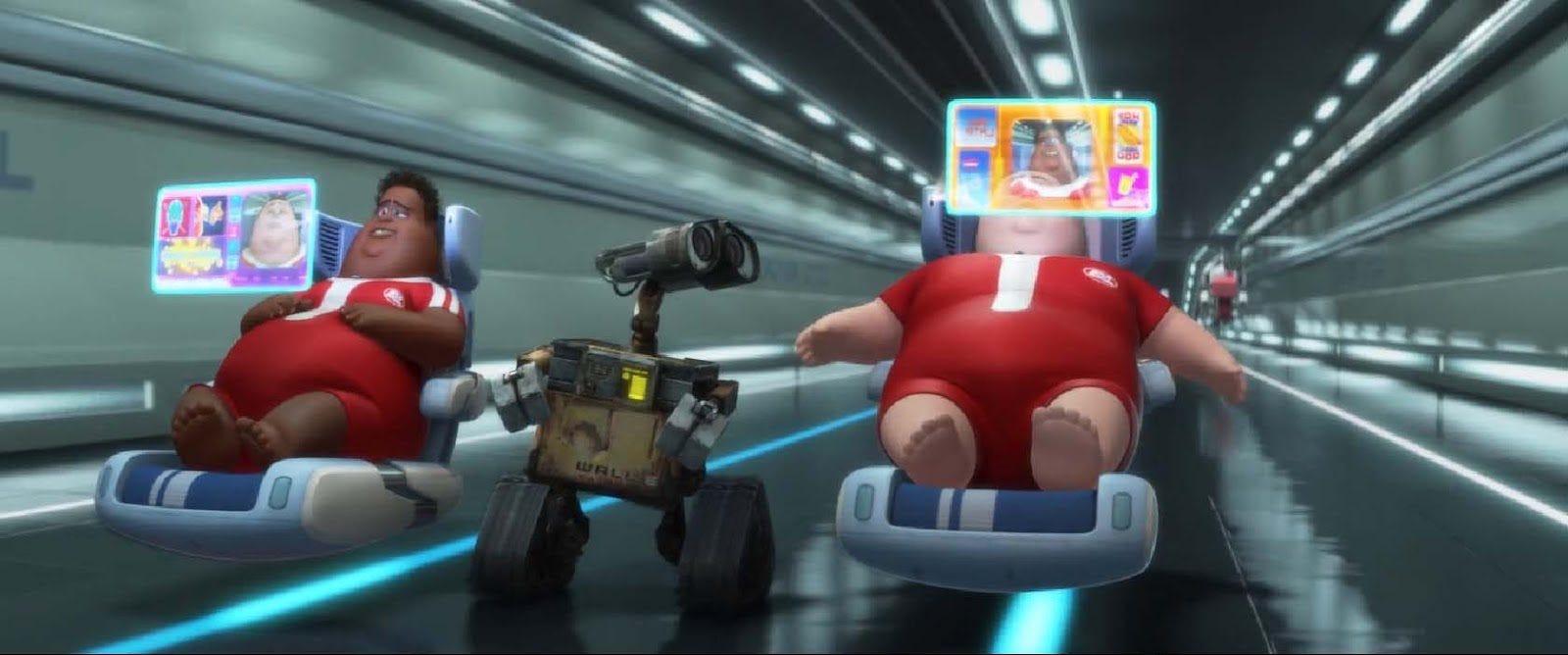
🤖 ChatGPT Might be turning us into Wall-e Humans
A new MIT study suggests ChatGPT can erode critical thinking. Where brain engagement literally doesn’t fire on when relying on AI… yikes!
🔎 Key findings:
🫠 ChatGPT users showed the lowest brain engagement: Users relying on ChatGPT for SAT-style essays exhibited weaker neural connectivity and lower creativity than those using Google or writing unaided.
😭 Skill atrophy through over reliance: Participants using ChatGPT increasingly resorted to formulaic copy-paste methods over time resulted in “soulless” essays and declining skills.
🔨Tool-assisted learning can help: Subjects who began by writing without AI, then used ChatGPT later, demonstrated better engagement and memory retention. Suggesting AI may enhance, not replace, deep learning.
⚠️Urgent need for policy oversight: Early use of LLMs in education without safeguards can stunt cognitive development in young learners
🏁Takeaway: We have to design learning experiences that balance convenience with critical thinking and develop a POV. For brands, creators, and educators, how do we leverage AI without letting brains go dim?
📰 Headlines! Headlines! Read all about it!
🎬 Reese Witherspoon launching a Gen Z brand: ...that definitely feels like it was cooked up by Boomers or bots.
Instagram partnered with Tyler the Creator for their biggest campaign ever. Casey from After School it up very well here. My opinion is that it feels like an old playbook approach to solving Meta/IG's GenZ problem... and honestly, if they just fixed their commenting it would probably change the energy on platform. This little 'test' is interesting.
Get a partner and join in this silly trend: duet, this one too, even blippi! OR the original Kesha trend is also cute, here too
🔍 Google’s AI ad study across 4.7k top ads: TLDR - embrace multiplatform and formats that can’t be done elsewhere, collaborate with creators, focus on culture - and YT is a canvas for it. .
📞 Blackberry nostalgia is trending: Millennials, and even GenZ are talking about bringing back the Blackberry phone. This again points toward GenZ’s analog nostalgia and reinforces that we’re all just seeking simplicity again in these unstable times.
📺 YouTube > Hollywood: 60% of U.S. teens 14–24 are more hyped for creator content than movies/TV (per YouTube at VidCon).
🍸 Sober Gen Z? Only 62% of under-35s drink alcohol now, down from 72% in 2001. Bero with Tom Holland anyone?
⚾️ MLB buys stake in Jomboy Media: Trying to stay relevant with young fans and creator-style digital sports storytelling.
🏀 NBA x Gen Z: The narrative is the sport. Storylines can even outperform gameplay itself.
🏠 Netflix House: No theme parks? No problem. Netflix expands IRL experiences — from Bites to Houses to build brand immersion.
🧱 ICE protests… on Roblox: Gen Z political literacy is going digital and deeply immersive. Organizing is going to look so different in the future.
Now let me leave you with this… I too, am VERY chalant.
Feels like the "60% of U.S. teens 14–24 are more hyped for creator content than movies/TV (per YouTube at VidCon)" stat is one of those reasons launching original IP at the box office is harder than ever.